4000 4WD PRO
Two electromagnetic retarders within the 4000 platform family. For projects requiring the PRO model’s higher dynamic and static catalogue ratings.
Enquire about this model ↗Specifications ↓ PRODUCT IMAGE / EQUIPMENT MAY VARY
One model. More perspectives.
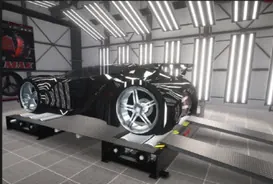
Views from the manufacturer's 2026 catalogue. The exact equipment is agreed for your project.


The facts.
In detail.
Specifications from the manufacturer’s 2026 catalogue. Power limits relate to different test modes and are not interchangeable.
Vehicle suitability, scope of supply and required infrastructure are clarified before an order.
| Measurement principle | Inertia and braked |
|---|---|
| Drive configuration | 4WD |
| Max. dynamic power | 1,900 hp |
| Max. speed | 300 km/h |
| Roller diameter | 270 mm |
| Max. axle load | 3,000 kg |
| Dimensions (L × W) | 4,105 × 3,645 mm |
| Braking torque (catalogue) | 1,800 Nm |
| Max. inertia power | 1,000 hp |
| Max. static power / road simulation | 1,200 hp |
| Electromagnetic retarders | 2 |
| Power supply | 220 V / 16 A |
| Compressed air (minimum) | 8 bar |
Configured for your application.
The manufacturer’s catalogue lists DynomiZer Wireless software and Omron sensors. WiFi modules for lambda, OBD and weather data are listed as options.
The catalogue describes above-ground and pit installation. The appropriate arrangement depends on the building, vehicles and intended operation.
Two retarders in the 4000 series
The 4000 PRO extends the 4000 concept with two electromagnetic retarders. The catalogue specifies 1,900 hp dynamic power, 1,200 hp static power and 1,000 hp inertia power. These differences are relevant when the planned tests require a higher load capacity than the 4000 provides.
The stated platform footprint remains 4,105 × 3,645 mm. The PRO model has 270 mm rollers. Room size alone therefore does not decide between the two models: the vehicles, test mode and required operating limits need to be considered together.
Define the PRO configuration
Bring examples of your all-wheel-drive vehicles and measurement tasks to the project discussion. The maximum speed is 300 km/h and the maximum axle load is 3,000 kg. Connections, cooling air, exhaust extraction and working routes also form part of the site plan. Suitability for a particular all-wheel-drive system requires a technical assessment.
What to prepare for planning ↗Ready for your
own test station?
Tell us what you want to test.
Let’s discuss the right configuration.